Pickleball Boom: How a “Sport for Seniors” Is Winning Over Families and Younger Players in Midland
Once seen as a slow-paced game for seniors, pickleball has taken off in Midland, Ontario. The Midland Area Pickleball club now boasts a long waitlist, and families are embracing the sport as a way to stay active, socialize, and bond across generations.
‘Athletic Chess’: Pickleball Popularity Nets Newcomers to Paddle Clatter
MIDLAND, ONTARIO – May 19, 2025 — Once brushed off as a pastime for retirees, pickleball is making noise—literally and figuratively—across Canada. In Midland, the sport is rapidly growing in popularity, fueled by its accessibility, family-friendly appeal, and what players call its “strategic athleticism.”
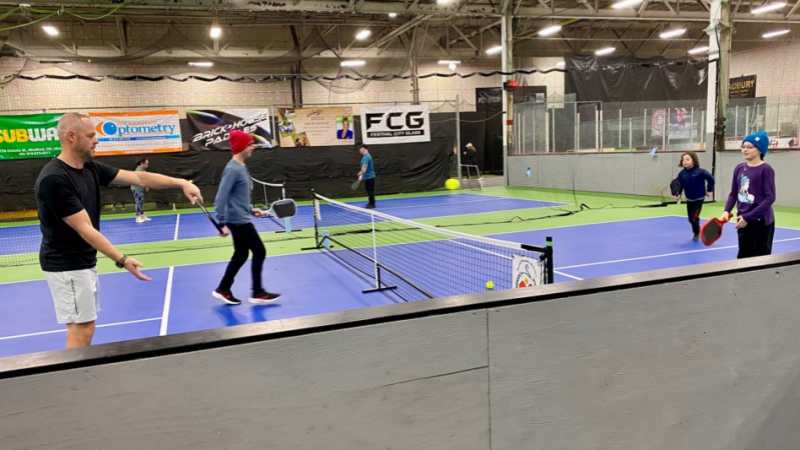
“It gets a lot of jokes because they associate it with seniors only,” says Erica Hoogerbeets, secretary of the Midland Area Pickleball (MAP) club.
The numbers tell a different story. A 2025 survey on pickleball in Canada shows the sport’s fastest-growing demographic is people aged 35 to 54. MAP’s own stats back it up: the nonprofit club currently has 185 members and a waitlist of more than 200 eager players.
Pandemic Spike, Year-Round Play
COVID-19 was a surprising catalyst for the sport’s explosion.
“After COVID, suddenly we had this exploding waitlist,” says Hoogerbeets.
With membership fees capped at just $125 per year, and most venues available through partnerships with schools and recreation centers, MAP has grown into a seven-day-a-week operation. Locations range from the North Simcoe Sports and Recreation Centre (NSSRC) to McGuire Park, Tiffin Park, and Tay Shores Public School.
Still, finding enough space to play remains a challenge.
“We try to be creative,” Hoogerbeets explains, noting that public courts like Tiffin Park are left unbooked to allow community access.
Game for All Generations
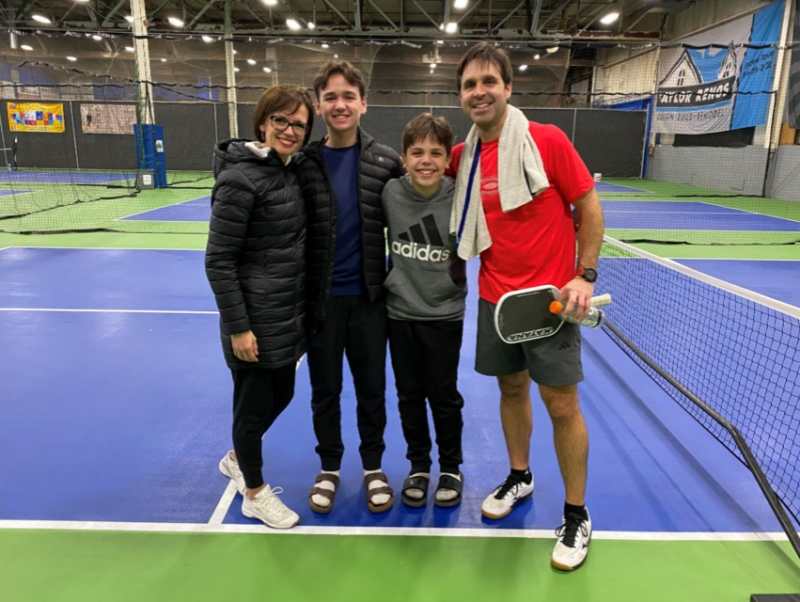
Roughly 65% of MAP’s members are over 55, but the appeal stretches well beyond that age group. For Adele Van Pletsen and her brother JP Van Rooyen, pickleball has become a way for their whole family—spanning three generations—to stay active together.
“I’ll admit I was one of those people who thought it was only for older folks,” says Van Pletsen. “Now my kids play, my mom plays, and we’re all out there.”
Van Rooyen agrees, crediting the sport’s strategic nature for its appeal to younger athletes.
“I call it athletic chess. You have to think strategically and be physically fit,” he says.
“You haven’t really played if you think it’s not exercise.”
A Sport That Connects
Both siblings grew up in South Africa and were introduced to tennis as a way to connect with others while moving frequently. Van Rooyen says the same community spirit exists in pickleball.
“You meet amazing people. I’ve seen my teenage son and nephew fall in love with the game,” he says.
Hoogerbeets says the sport has changed her family dynamic as well.
“Before pickleball, I would talk to my mom regularly and visit. Now I see her several times a week on the courts. I love that.”
Community Impact
MAP is deeply embedded in the Midland community. By collaborating with schools to rent gyms in the colder months, the club helps local institutions while expanding access to the sport.
“It puts money in the pockets of schools and gives the community more ways to stay active,” Van Rooyen notes.
Ultimately, fun is the main driver—88% of Canadians polled say that’s why they play.
“It brings people together,” says Van Rooyen.